Home › Sitework and Structural Concrete
Complete your project with reliable structural concrete in Phoenix, AZ. We place footings, walls, pedestals, and equipment pads as part of sitework and building packages. Our team handles layout, reinforcement, and formwork for structural elements that support your facility.
Superior Concrete Phoenix provides professional structural concrete throughout Phoenix, AZ, Arizona and the surrounding area. Our licensed, insured crew delivers safe, clean, on-time work with a free estimate before anything begins. Call (928) 756-4158 or request your free quote.
Sitework and structural concrete that fits Phoenix conditions
Structural concrete in Phoenix has to do more than look good. It has to handle 115-degree summers, sudden monsoon storms, and our expansive desert soils. At Superior Concrete Phoenix, we design and build sitework and structural concrete around those exact conditions, not a generic national standard.
When you call us about a project, we start with how the site behaves. We look at drainage, soil type, existing structures, and access for trucks and equipment. For structural concrete, the conversation usually covers the loads the slab or foundation will carry, any seismic or wind requirements from your engineer, and how thermal movement will be handled. For sitework, we talk through elevations, how water will move across the property, and how traffic or equipment will use the finished areas.
From there we coordinate with your engineer or architect, or bring in one we trust if you do not have plans yet. We confirm slab thickness, reinforcement type, footing dimensions, concrete strength, and any vapor or moisture control details that matter in our dry-but-flash-flood-prone climate. The goal is a design that is strong enough, buildable in Phoenix conditions, and realistic for your budget and schedule.
How we handle sitework on Phoenix properties
Good structural concrete starts with sitework that is done correctly. In Phoenix, that usually means grading for drainage first. Our crews cut and fill to create a consistent slope away from buildings, driveways, and slabs so water from storms does not pond against your structure or run into garages and roll-up doors.
Once rough grading is done, we address soil conditions. Many lots in the Valley have native caliche or compacted fill. We scarify the top layer, add or replace base material where needed, then moisture-condition and compact it to the density specified in your plans. For parking lots, equipment pads, and warehouse slabs, we typically place and compact an ABC (aggregate base course) layer to provide uniform support and help spread loads.
We also lay out utilities and sleeves before concrete ever shows up. That can include conduit for power, plumbing stubs, drains, and sleeves for future data or irrigation. On commercial or multifamily sites, we coordinate with other trades so their work does not cut up finished concrete later. Curbs, gutters, valley gutters, and sidewalk transitions are then laid out so they tie cleanly into the grading and drainage plan.
For access drives, dumpster enclosures, and loading docks, we design the subgrade and base to handle trash trucks, delivery vehicles, and forklifts, not just cars. That might mean thicker sections, more reinforcement, and higher PSI concrete than what is used in residential driveways. The sitework scope ends with fine grading so that forms set quickly and elevations come out right the first time.
Structural concrete: slabs, footings, and load-bearing elements
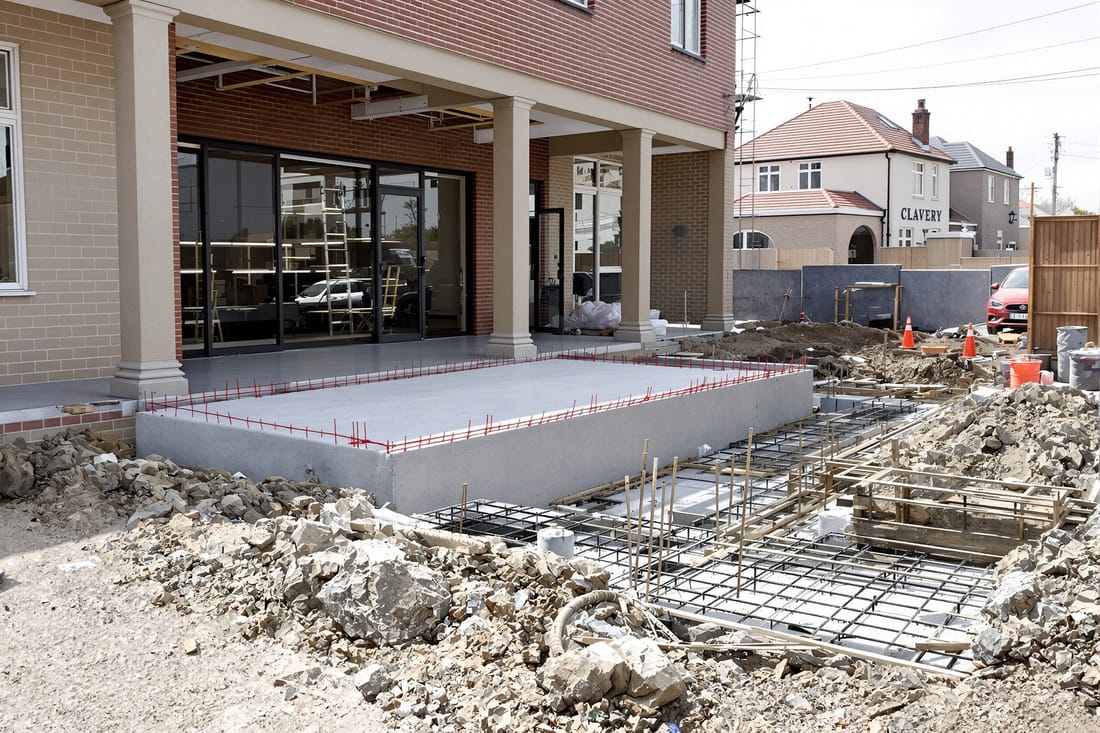
Once the site is ready, we move into the structural concrete itself. For foundations, that usually starts with layout and excavation of footings or grade beams. We set string lines and use lasers to lock in elevations so finished floors come out at the right height relative to doors, streets, and existing construction. Footings are dug to the required depth to reach competent bearing soil and to meet frost and code requirements, even though Phoenix frost depth is low compared to colder regions.
Rebar is then placed and tied according to plan. For typical slab-on-grade projects in Phoenix, that might be #4 or #5 bar at specified spacing, continuous bars around columns and load-bearing walls, and dowels where future concrete will connect. For post-tensioned slabs, we coordinate with the cable supplier, install the tendons per engineered layout, and make sure stressing is done at the correct time and documented.
We pour structural slabs and beams with mixes suited to our climate, often 3,000 to 4,000 PSI for residential and lighter commercial projects and higher strengths where specified. In hot months, we schedule early morning placements, use set-control admixtures when needed, and manage water carefully so the mix stays within design limits. We place the concrete, strike it off, bull float, and then finish depending on use: broom for drive lanes and exterior walks, hard trowel for interior warehouse or garage slabs, or a slightly textured finish for areas that might get wet.
Anchor bolts, hold-downs, and embedded plates are set and checked before the concrete sets, so steel, masonry, or wood framing can start without delays. We pay close attention to control and expansion joint layout so slabs can move slightly with temperature and moisture changes without random cracking. In a climate like Phoenix, with big temperature swings between night and day, this detail matters more than many owners realize.
Local challenges in Phoenix and how we address them
Phoenix structural concrete has a few recurring challenges: heat, rapid evaporation, occasional expansive soils, and drainage during intense storm bursts. Superior Concrete Phoenix has built our methods around those realities.
Heat and low humidity can cause plastic shrinkage cracking if the surface dries too fast. To prevent that, we often start pours well before sunrise in the summer, use evaporation reducers, and set up windbreaks on exposed sites. We never add extra water at the truck to keep concrete "workable". Instead, we adjust with admixtures approved by the ready-mix supplier so the final strength and durability are not compromised.
Our soils are often a mix of sandy material and hard caliche. Where an engineer notes expansive or inconsistent soils, we may over-excavate and replace with engineered fill, or thicken slabs and add reinforcement in strategic locations. On projects with existing structures, we look for signs of past movement, such as cracked slabs or separated joints, then factor that into how new concrete is detailed and connected.
Drainage is another local concern. Even in a dry climate, a single monsoon storm can overwhelm poorly designed flatwork. We use minimum slopes that exceed bare code where practical, incorporate valley gutters and surface drains, and ensure that curb and gutter tie into city streets or retention basins correctly. On commercial sites, we pay attention to ADA slopes while still moving water away from buildings, which can be tricky without local experience.
UV and temperature cycling can be hard on exposed concrete. When appropriate, we recommend sealers that can handle Phoenix sun and the occasional hot tire pickup, especially on driveways, dumpster pads, and loading areas. We also discuss realistic expectations about hairline cracks and surface wear so owners know what is normal aging versus what might signal a structural problem.
What affects cost and how to plan your project with us
Sitework and structural concrete pricing in Phoenix is driven by five main factors: access, thickness and reinforcement, soil conditions, finish requirements, and schedule. Superior Concrete Phoenix walks you through each of these before you commit, so there are fewer surprises once work starts.
Access affects how efficiently we can place and finish concrete. Tight alleys, limited street parking, or overhead power lines can mean smaller trucks, pumps, or more labor. A clean, well-prepared site usually means a better price. Thickness and reinforcement are straightforward: heavier loads mean thicker slabs, more or larger rebar, or post-tension systems, all of which add material and labor but are often cheaper than repairing a failed slab later.
Soil conditions can change costs mid-project if they are not understood early. If your plans require a geotechnical report, we review it before bidding. If you do not have one, we rely on local experience, test pits, and compaction testing during sitework. When we hit soft pockets or unsuitable fill, we explain the options on the spot, from undercut and replace to redesign of the section, so you can make an informed decision quickly.
Finish requirements also matter. A basic broom-finished parking area costs less than a tightly toleranced interior slab for racking or equipment, where flatness and levelness need more attention. Adding color, decorative saw cuts, or specialty coatings will increase the price, but planning those up front usually costs far less than modifying a plain slab after the fact.
Schedule is the final driver. If you need night work, phased openings, or coordination around other trades on a tight commercial timeline, we can do it, but it takes more labor and planning. We would rather talk honestly about your schedule and budget early, then build a realistic plan for both. When you are ready to look at options for your Phoenix project, Superior Concrete Phoenix can walk the site, review plans, and give you a detailed proposal that explains what you are buying and why each element matters.